An initiative from researchers at the University of Iowa to understand and regulate drinking water vending machines.
What is a drinking water kiosk?
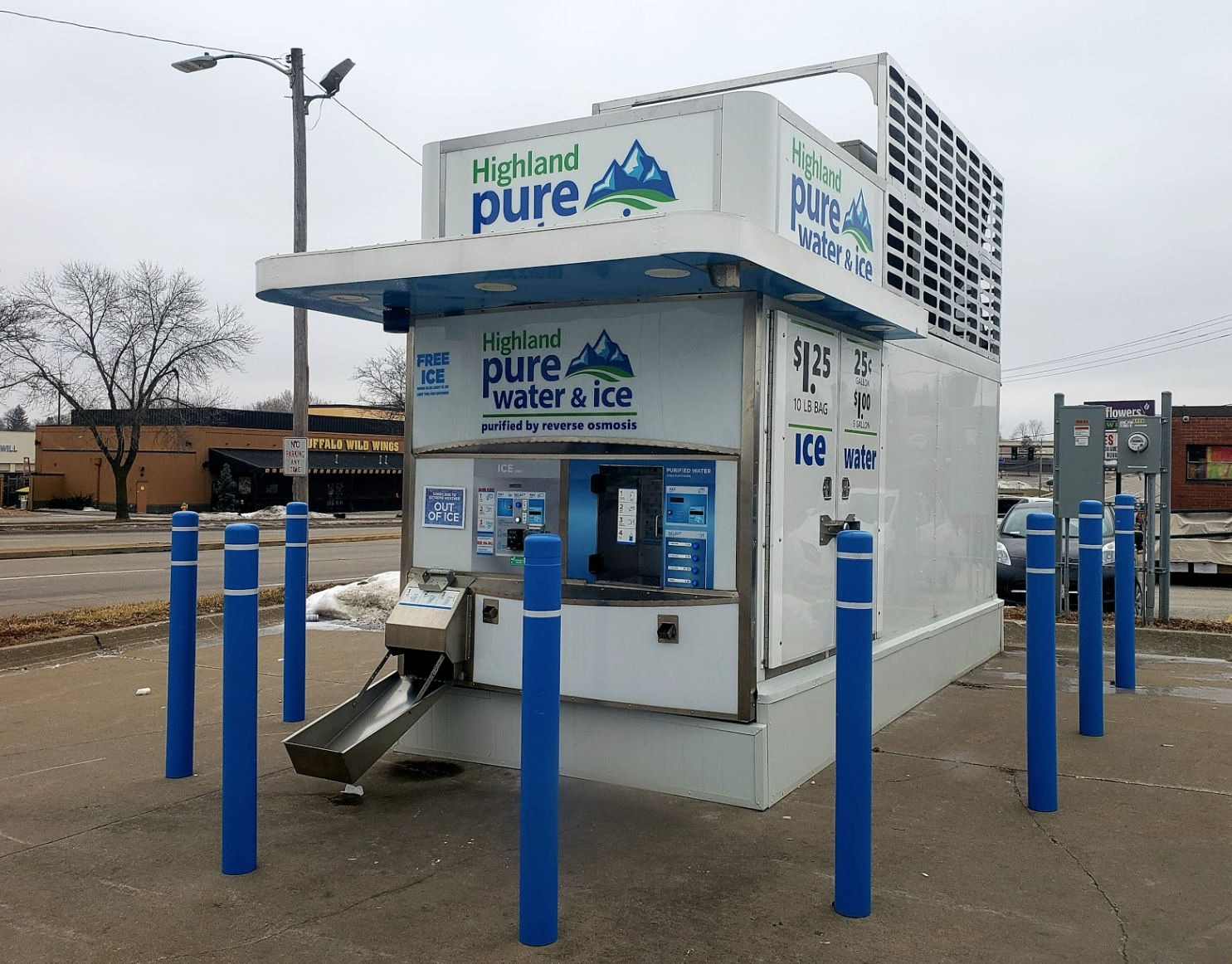
Drinking water kiosks are privately owned, drinking water vending machines that dispense water in gallon units. Sometimes water kiosks are called drinking water vending machines. These machines sell water for $0.25 to $0.35 per gallon. Kiosk water costs more than tap water. Some kiosk brands claim to remove impurities, minerals, and other contaminants from drinking water through advanced treatment processes, like reverse osmosis and carbon filters. Depending on the model of the kiosk, the machines can also dispense ice.
Where are drinking water kiosks located?
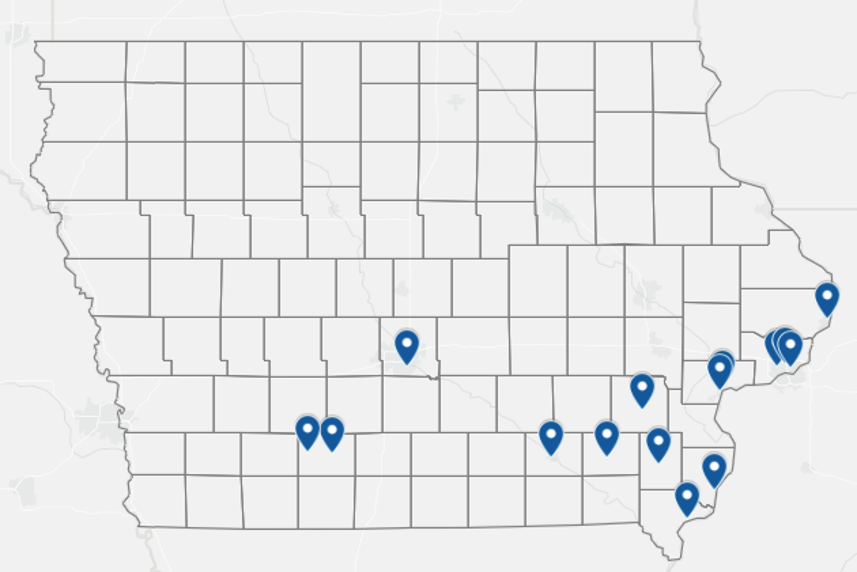
This map features the locations of drinking water kiosks in Iowa that were included in the study.
Addresses of kiosks
Addresses of kiosks
Afton:
204 E Kansas St, Afton, IA 50830
Bettendorf:
2925 18th St, Bettendorf, IA 52722
Burlington:
1015 Division St, Burlington, IA 52601
Clinton:
340 5th Ave S, Clinton, IA 52732
Creston:
1407 US-34, Creston, IA 50801
Davenport:
2402 E 53rd St, Davenport, IA 52807
3833 N Division St, Davenport, IA 52806
Des Moines:
3310 SE 14th St, Des Moines, IA 50320
Fairfield:
803 W Burlington Ave, Fairfield, IA 52556
Fort Madison:
1702 Ave H, Fort Madison, IA 52627
Mt Pleasant:
304 W Washington St, Mt Pleasant, IA 52641
Muscatine:
901 Cypress St, Muscatine, IA 52761
714 Grandview Ave, Muscatine, IA 52761
Ottumwa:
819 Albia Rd B, Ottumwa, IA 52501
Washington:
223 W Madison St, Washington, IA 52353
About the study
We conducted a study to assess kiosk water quality. In our study, we tested 20 kiosks and corresponding tap water sites. Samples were collected across two sampling campaigns, one in Iowa in December of 2023 and the other in Iowa and surrounding states in September 2024.
Sampling overview:
- Water samples were collected from all known kiosks in Iowa.
- A field probe was used to measure pH, temperature, conductivity, and residual chlorine at the time of sample collection.
- In September 2024, kiosk ice was also purchased for analysis if it was available.
- Paired tap water samples of identical volumes were collected at accessible tap water locations near kiosks.
- All samples were analyzed for the presence of microbes, PFAS, major ions, metals, and bulk water quality characteristics using established methods.
Here’s what we found:
- Water sold from kiosks is significantly different from tap water at most locations, but not all.
- Most, but not all, kiosks treat water according to the treatment processes listed on their signage.
- Kiosks, especially those using reverse osmosis (RO), are effective at removing polyfluoroalkyl substances (PFAS).
- Water sold by some kiosks may dispense drinking water with lead at levels above public health recommendations. The lead originates from the “lead free” plumbing components within the kiosk machines. The small amount of lead present in these parts can result in lead leaching into the drinking water dispensed by a kiosk when these parts are placed after RO treatment.
FAQs
Where do water kiosks get their water?
Water kiosks source water from the municipal tap water supply. Some water kiosk brands claim to perform additional treatment to water before selling it to consumers as water and ice.
Who owns water kiosks?
Kiosk companies are privately owned, for-profit companies that allow individuals or groups to purchase and operate their own kiosk.
What’s the problem with water kiosks?
There are very few regulations in place that require testing of kiosk water quality. By comparison, tap water is heavily tested and regulated. In Iowa, there are no requirements for kiosk owners to test if the water they provide meets Safe Drinking Water Act (SDWA) standards. Researchers from the University of Iowa have tested water sold from kiosks. In some cases, the water sold by kiosks does not meet SDWA standards and can expose consumers to lead and other contaminants.
There's a kiosk in my community that's not on the map.
This map features stand-alone kiosks in Iowa that were included in the study. We chose to examine kiosks located in parking lots outside of businesses. Other kiosks exist within businesses (e.g., grocery stores), but our study did not examine these types of kiosks. If there is a kiosk in your community that you would like information about, please contact the kiosk owner or reach out to us using the information included in the "Contact" section at the bottom of this page.
Why/How is there lead in kiosk water?
Lead was found in sampled water from certain kiosks and not found in adjacent tap water samples. The lead originates from the “lead free” plumbing components within the kiosk machines. The small amount of lead present in these parts can result in lead leaching into the drinking water dispensed by a kiosk when these parts are placed after RO treatment.
Do all kiosks sell water that contains lead?
Not necessarily. Our study does not examine every kiosk. Our research demonstrates that the quality of drinking water sold by kiosks is highly variable. We most frequently detected lead in drinking water sold by kiosks using reverse osmosis (RO) technology. If you have been purchasing water from a kiosk that is not included in our study, and you want to learn more about the quality of drinking water sold at that location, contact the kiosk owner.
If water sold from kiosks contains lead, does that mean there is lead in my tap water?
Not necessarily. Our testing in Iowa and other states indicates that some kiosks have higher levels of lead in the water they dispense than in nearby tap water.
Drinking water samples were collected from all known kiosks in Iowa, along with adjacent tap water source samples. The samples were tested across a wide range of water quality parameters. According to testing results, kiosks provide drinking water that is significantly different from tap water along a variety of dimensions. Kiosk samples varied in quality, indicating a lack of consistency in selling high-quality water as advertised. Researchers found similar results in nearby states.
What do I do if I am concerned about lead in my tap water?
If you are concerned about lead in your tap water, contact your local water utility. Many utilities and states have lead testing programs that will assess your water free of charge. You can also ask your water utility if you have a lead service line.
If you are in the state of Iowa, you can reach out to Get the Lead Out for a free water testing kit:
For more information about what to do if you are concerned about lead in your tap water:
What do I do if I’ve been drinking kiosk water?
- If you have been drinking water from a kiosk and are concerned about potential lead exposure, contact your health care provider, local Public Health Department, or Environmental Health Department for more information.
- We recommend purchasing drinking water from sources that are more regulated, such as tap water or bottled water. Tap water is heavily regulated by the Safe Drinking Water Act. If you have concerns about your local tap water quality, reach out to your local water utility. Bottled water is regulated by the Food and Drug Administration, which sets the maximum allowable limit of lead to 5 ppb.
Why isn’t anyone testing the kiosk water?
It is unclear how kiosks are regulated in Iowa. Due to the ambiguity in regulation, there is no known monitoring or testing of kiosk water at this time. Kiosk companies do not advertise or make consistent water testing information available to the public.
How is lead regulated in drinking water?
The U.S. Environmental Protection Agency (EPA) regulates drinking water under the Safe Drinking Water Act. The EPA requires all community water systems to prepare and deliver an annual water quality report called a Consumer Confidence Report (CCR) for their customers.
There is no safe level of exposure to lead.
In 2024, the Lead and Copper Rule Improvements were finalized, which lowered the EPA action level from 15 ppb to 10 ppb. If water systems exceed this level, they must:
- Take further steps to optimize their corrosion control treatment
- Educate the public about lead in drinking water and actions consumers can take to reduce their exposure to lead
- Replace the portions of lead service lines under the water system’s control
Where can I learn more about drinking water regulations in Iowa?
Iowa Department of Natural Resources (DNR)
Iowa State University Extension and Outreach:
Drinking Water Quality in Iowa
Resources

Get the Lead Out
Assess the risk of lead in your home's drinking water

Drinking water in your home
Many people choose to filter or test the drinking water that comes out of their tap or from their private well ...
Basic information about lead in drinking water
Questions and answers about lead in drinking water: health effects, EPA regulations, etc.

Consumer Confidence Reports
Each year by July 1, you should receive a Consumer Confidence Report (CCR), also known as an annual drinking water quality report ...